
| Ed Hill is a Partner at FTP and a recognized expert in financial services policy and advocacy. With over 30 years of experience in the field, he advises and works with clients who have policy issues before Congress and financial regulators. Most recently, Ed served as Senior Vice President and Head of Government Affairs for the Bank Policy Institute. In that role, he helped lead BPI’s federal advocacy efforts on member company priorities, including those in capital and liquidity, consumer banking, technology, and national security. Kelley Williams is a Partner at FTP. She handles a diverse portfolio of issues, but her specialty is in financial services, insurance, and banking. She also lobbies on transportation, telecom, fintech, and energy issues for the firm’s clients. In her 15 years as a senior government relations professional, she has successfully demonstrated an ability to craft and implement complex legislative strategies for her clients while leveraging relationships and resources across multiple sectors. |

Question –
How will the new Congress address potential regulatory reforms to the financial system?
Newly elected Chairs of the House Financial Services Committee and Senate Banking Committee, Rep. French Hill (R-AR) and Senator Tim Scott (R-SC), have committed to pushing policies to reduce the regulatory burden to free all segments of the financial sector to serve their customers better. Several areas of regulatory burdens that the two Chairs may address include streamlining the bank merger process so that smaller institutions can build scale to better compete, reducing the burden for emerging companies seeking to access public markets, and focusing on streamlining efficiencies in housing programs.

Question –
Will financial regulators modernize regulation of emerging technologies, particularly in regulating digital assets, fintech companies, and ensuring privacy safeguards for consumers?
The regulators appointed by President Joe Biden were quite active. The CFPB proposed or finalized regulations addressing Earned Wage Access, Buy Now Pay Later, large market participants such as PayPal, Apple, and Zelle, and open banking intended to give consumers greater access to their data. Further, bank regulators placed new requirements on the banks looking to engage in “novel activities,” including certain crypto activities. The SEC has also made it harder for certain crypto activities to be conducted by both crypto-native firms and traditional financial institutions.
New regulators appointed by President-elect Donald Trump will look to roll back many of these and, where possible, provide greater regulatory certainty to promote innovation. This is particularly true for digital asset companies which have sought greater regulatory clarity for their products.

Question –
Will reform of the Government-Sponsored Enterprises (i.e., Fannie Mae and Freddie Mac) be tackled in the next two years?
With a united Republican government, the likelihood of GSE reform increases, but other factors at play may prove a challenging environment to finally remove the GSEs from conservatorship. For one, this is an incredibly thorny issue that has eluded even previous bipartisan attempts at reform. Further, each party has different objectives (i.e., increasing affordable housing/the government playing less of a role in the housing market), and with a slim majority in the House, this could prove an insurmountable obstacle.
The current discussion about how to sequence reconciliation and what may be used as a pay-for, could ultimately fast-track a process that needs considerable thought and cooperation to ensure no adverse effects on an already tenuous housing market.
President-elect Trump has promised to impose a 25% tariff on all goods from Canada and Mexico unless they stop the flow of illegal immigration and drugs across their borders into the U.S., and an additional 10% tariff on all goods from China as part of his first executive orders. Our Research and Policy Analysis Department has prepared slides explaining the mechanisms through which the president can implement tariffs and the USMCA implications of imposing across-the-board tariffs on Canada and Mexico.


###
About Forbes Tate Partners:
Forbes Tate Partners is a bipartisan, full-service public affairs consultancy specializing in government relations, grassroots advocacy, strategic communications, fundraising, and business development. The firm’s primary areas of specialty are the development and implementation of bipartisan lobbying and advocacy strategies related to tax, health care, natural resource management, trade, energy, telecommunications, outdoor recreation, appropriations, and agriculture. Jeff Forbes and Dan Tate, Jr. founded the firm in 2012.
Forbes Tate Partners has been highlighted as one of Bloomberg’s top performing lobbying firms and as one of PR News’ Agency Elite Top 100 agencies, recognizing the leading public relations practices in the country.

| Doug Usher, Ph.D. is a partner at Forbes Tate. Doug has spent the last two decades building insights that have helped change the strategic trajectory of major corporations, industry associations, and political campaigns. Combining deep expertise in opinion research, data analysis, and analytics with years of experience navigating the intersection between business goals and the political, policy, and regulatory spheres. Doug has helped build winning strategies and campaigns for clients across a broad range of industries. |
Question –
How’d the pollsters do in the election?
On the whole they had a better night than they’ve had over the last few election cycles. In 2016 and 2020, public pollsters underestimated Trump support by a sizable margin. This time? They were within just a point or two of the final result. Perhaps more important, reporting on the polls provided a realistic perspective on the election outcome – it was a coin toss, and Trump ended up ahead by a couple of points. That’s the best we can expect from polls.
Question –
What are some long-term trends that matter?
Polling will continue to dominate political headlines, especially when other types of reporting (particularly “vibe” reporting) can swing so wildly from side to side. The long-term challenge that is most vexing to pollsters is that presidential elections are close every time. We don’t have presidential blowouts. This time, Trump won by about the same margin Biden won last time, which followed a close election in 2016. When the election is close at the stretch, there’s not much for polls to tell us except… wait until election day!
Question –
What’s the biggest mistake people are making when they look at the election?
We tend to overread election results. After investing so much time and energy in following (and working in) elections, we want to get an immediate, clear narrative. Trump has remade the GOP coalition, and that’s an incredibly interesting result. But jumping to a conclusion that this new coalition could be durable and might outlast Trump is an overreach – just like when political analysts thought the 2008 Obama election would reshape American politics. We keep getting close elections, with different configurations of the electorate every time.

| Shanita Penny is a senior vice president at Forbes Tate Partners. As an internationally recognized strategy consultant and certified Project Management Professional, Shanita combines talent and passion for the cannabis industry to achieve exceptional results for businesses and operators. Before joining FTP, she ran her own boutique cannabis consultancy, helping clients establish and scale compliant, successful cannabis businesses. She currently serves on the Board of Directors for the Alliance for Sensible Markets and on the Advisory Board of Regennabis. Shanita is a proud alumna of North Carolina Agricultural & Technical State University, as well as the University of Baltimore and Towson University. |
Question –
Can you explain your work in the public health and health equity space and what drew you to this work?
My key focus at Forbes Tate Partners is to advise healthcare, tech, and pharmaceutical clients on addressing some of the most pressing public health issues and inequities. Providing strategic direction, identifying and engaging stakeholders, and helping tell local and national stories about their efforts and outcomes are all integral to this work. I was drawn to the public health and health equity space over 10 years ago when I started advocating for medical cannabis legalization.
Cannabis public policy impacts both and requires thoughtful and intentional policy development to improve public health and health equity. As we legalized cannabis in states throughout the country, green deserts, like food and healthcare deserts, were an unintended consequence, leaving many under and never-served populations without access to medical cannabis. Criminal justice reform is also a pillar of my cannabis advocacy and encounters with the criminal justice system have proven to negatively affect health outcomes for individuals and communities.
Question –
How does stakeholder engagement play a key part in advocacy today?
Knowing who is for, against or even agnostic towards an issue or organization is critical to a project or initiative’s success. Deciding whether and how to engage stakeholders is important; oftentimes it’s not enough to attempt to get buy-in or ask for something if you haven’t engaged the stakeholder to some degree throughout the process. Awareness about an issue or your existence and mission is a great place to start. You never know who will become a supporter or at a minimum, not be an impediment. Stakeholders may also have work or relationships that can be leveraged to fast-track or overcome challenges in advocacy.
Question –
What do you find to be most rewarding about the wide-ranging collaboration you foster at FTP?
Radical collaboration! Empowering diverse individuals and organizations to work together in a space that allows for different thinking and doing. I’ve always believed that an individual can do more and better with the right people. Since joining FTP I’ve been amazed at how many times one of my colleagues points me in the direction of another colleague who happens to have an experience or connection to the “missing piece” of a problem I am trying to solve, for the firm or a client.
WASHINGTON, D.C. – Forbes Tate Partners (FTP) is excited to announce its Partner, Ed Hill, is joining as co-host of Macrocast, a weekly podcast delivering expert insight and analysis on the latest macroeconomic trends. In collaboration with Markets Policy Partners, Macrocast brings listeners in-depth commentary on the intersection of markets, policy, and economics in a concise, 30-minute format.
Hosted by FTP’s Ed Hill, alongside Markets Policy Partners’ John Fagan and Brendan Walsh, Macrocast dissects the most pressing economic issues shaping the markets. The podcast equips listeners with the essential knowledge to stay ahead of financial trends and make informed decisions, whether at work, in conversations with friends and family, or while managing personal finances.
“Macrocast offers a unique blend of market and policy expertise,” said Ed Hill, Partner at Forbes Tate Partners. “It’s designed to break down complex topics in a way that’s accessible and engaging, giving listeners the insights they need to understand how macroeconomic trends affect their daily lives.”
“We’re excited to welcome Ed Hill and Forbes Tate Partners as co-hosts and co-producers of Macrocast,” said John Fagan, Co-founder of Markets Policy Partners. “Ed brings a wealth of experience and fresh perspectives on the financial policy landscape, making this partnership a perfect fit for delivering the kind of thoughtful, timely analysis our listeners have come to expect.”
“Our collaboration with Forbes Tate Partners and Ed Hill elevates Macrocast to the next level,” said Brendan Walsh, Co-founder of Markets Policy Partners. “Together, we’re offering listeners deeper insights at the intersection of markets, policy, and economics, empowering them to stay ahead of the game in an increasingly complex financial world.”
Produced by Markets Policy Partners, Macrocast is the go-to source for anyone seeking a clear and concise analysis of economic developments. With expert hosts who have spent their careers advising on government policy and analyzing market movements, listeners can expect timely and actionable information to navigate the ever-changing financial landscape.
Listeners can tune in weekly on Apple, Spotify, YouTube, and Buzzsprout.
###
About Forbes Tate Partners:
Forbes Tate Partners is a bipartisan, full-service public affairs consultancy specializing in government relations, grassroots advocacy, strategic communications, fundraising, and business development. The firm’s primary areas of specialty are the development and implementation of bipartisan lobbying and advocacy strategies related to tax, health care, natural resource management, trade, energy, telecommunications, outdoor recreation, appropriations, and agriculture. Jeff Forbes and Dan Tate, Jr. founded the firm in 2012.
Forbes Tate Partners has been highlighted as one of Bloomberg’s top performing lobbying firms and as one of PR News’ Agency Elite Top 100 agencies, recognizing the leading public relations practices in the country.

| Tate Bennett is a partner at Forbes Tate Partners. Tate Bennett has become a mainstay in Washington, D.C. food and agriculture policy. Many of her clients play key roles in our domestic food supply and farm economy. Bennett previously worked on the 2014 Farm Bill in both the U.S. House of Representatives and Senate, including for Senate Republican Leader Mitch McConnell (R-KY). She has also advised on agriculture issues in senior roles at the White House and the U.S. Environmental Protection Agency. She credits her rural upbringing for helping her to better understand her clients’ issues. She grew up on a horse farm in Kentucky, and her grandparents were in the dairy business. When not on Capitol Hill, which is most days, Tate is busy raising her two young children, at the barn, or at a horse show. |
Question –
Where do you see the food pricing and inflation fitting into this election?
These are economic issues, which have long been top of mind for voters and remain so today. Recent polls show that the economy and inflation are important to 81 percent of registered voters heading to the polls this fall. The need for a robust domestic food supply and a strong rural economy is certainly a big part of that conversation.
Question –
What legislative priorities are you thinking about for the remainder of this Congress and next Congress?
As someone who follows food, agriculture, and related policies, the next Farm Bill is top of mind. The current extension of the 2018 Farm Bill expires September 30th. A lapse in the Farm Bill has no real immediate ramifications to farmers; however, Congressional leaders are considering passing a new Farm Bill or another extension later this year and ahead of a new Congress with an already jampacked agenda. Many are pushing for the former, as 2024 inflation-adjusted net cash farm income projections for many crops are their worst in over a decade. Further, a new Farm Bill provides opportunities to update other critical policies, including rural development, energy, horticulture, forestry, credit, agriculture trade, and nutrition.
In the new 119th Congress, there will be a flurry of activity out of the gate. Such activities include setting up new Congressional procedures and committee assignments, and addressing the debt limit and 2025 expiring tax provisions.
Question –
What is one area of expertise that people may not know you have?
My colleagues and friends get a chuckle, but I work on industrial hemp and cannabis policy! I actually serve as co-executive director of the Coalition for Cannabis Policy, Education, and Regulation (CPEAR), one of the Forbes Tate Partner’s prominent coalitions. During the 2014 Farm Bill and at the White House, I worked on industrial hemp, a crop with great potential, and related policies. That has translated into my extensive understanding a variety of cannabinoid issues.
Also, I’m always happy to discuss the Federal Insecticide, Fungicide, and Rodenticide Act (FIFRA), but strangely only a few people ever take me up on it.
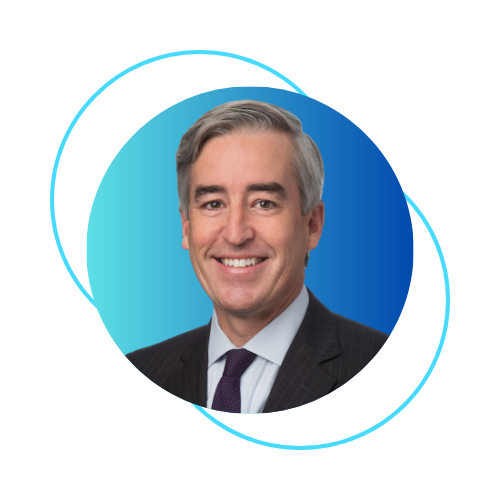
| George Cooper is a partner at Forbes Tate Partners. Before joining Forbes Tate Partners, Cooper served as President and CEO of the Theodore Roosevelt Conservation Partnership (TRCP) and spent over a decade at CNN. George leads the firm’s natural resources and outdoor recreation government affairs practice, representing nonprofits, corporations and trade associations on policy related to natural resource conservation, public lands, marine fisheries, agricultural land, tax, trade, and appropriations issues. While everyone gets ready to head out of the city for August recess, we asked George to share some insights on the issues impacting outdoor recreation in America. |
Question –
What impact does tourism have on our country’s natural resources and conservation efforts?
When it comes to public land and water, the dynamics cut a few different ways. On the positive side, the incredible popularity of our national parks, state parks and other public lands as places for people to get outside and get active means more Americans are maintaining or gaining an appreciation for the value of these places. In theory, that appreciation would translate into constituents pressing federal and state governments to provide adequate resources and funding to manage and conserve these natural resources in a balanced manner guided by best available science. I’d say at the federal level for sure, we still have major resource shortfalls in need of attention. We are loving some of these places to death and we are not giving natural resource managers what they need carry out the very complicated work of allowing for multiple kinds of uses of our public natural resources, including high public demand for recreational access. Here in Washington, outdoor recreation related tourism continues to represent a policy space where we can find a high level of bipartisan cooperation, so we’ve made some incremental progress on this front and I’m bullish about continued progress.
Question –
Earlier this year, you helped pass the EXPLORE Act. Can you tell us a little more about this bill and its importance?
We did get this passed in the House of Representatives on a voice vote under suspension which speaks very directly to my point above – in a narrowly divided House where bipartisanship has been in short supply for many Congresses now, this legislation addressing a wide range of federal outdoor recreation management needs came out of committee smoothly and the full House smoothly. Its Senate companion, America’s Outdoor Recreation Act, similarly came out of committee unanimously twice. This bill for the most part is aimed at helping the federal government update its approach to recreation management on many fronts that have been in need of attention for some time including how various seasons for recreation permitting are determined, updated campground management, more effective gateway community collaborations – it’s a long list. It’s not sexy stuff but it gets at the guts of how our public land management agencies approach facilitating recreation and if passed and implemented, this legislation will help all Americans who love the outdoors. It’s a big deal.
Question –
How is climate change affecting outdoor recreation in our country? What can we do about it?
In a very practical sense, people are having to shift the locations of where they pursue their favorite outdoor activities or turn to different activities in the places they live. Whether it is fishing, hunting, skiing – name the activity – seasons and weather are changing. Outdoor recreation businesses are having to adapt and evolve and this brings us back to federal advocacy. We need to make sure the agencies managing the places we recreate outdoors in this country are able to carry out adaptive management of fish, wildlife, and infrastructure that anticipates climate-driven changes. We need to be clear eyed about all of these practical considerations and make sure outdoor recreation interests are communicating clearly with members of Congress and presidential administrations.
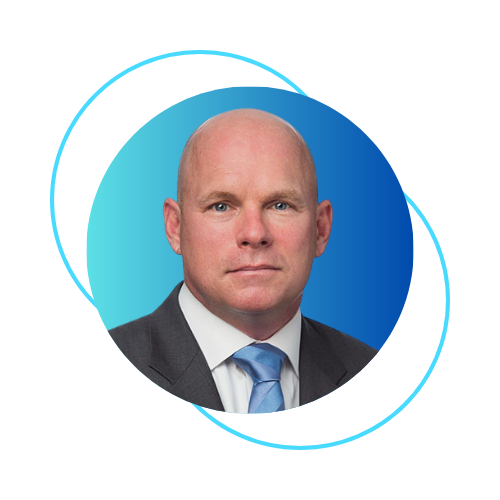

Dan Tate Jr. is a founding partner at Forbes Tate Partners (FTP) with more than 25 years of experience, including a decade of senior staff positions in the White House, U.S. Department of Energy, and the U.S. House of Representatives. Kristina Dunklin is a partner at FTP with extensive experience on Capitol Hill, having worked for members of both the House Appropriations Committee and Energy and Commerce Committee.
Dan is currently living with ALS – often known as Lou Gehrig’s disease – a neurological condition that aggressively affects voluntary muscle function. He serves on the board of patient-led organization I AM ALS and, working closely with Kristina, has contributed to the organization’s advocacy campaign to end the disease.
The campaign is showcased in the newly released film “For Love and Life: No Ordinary Campaign,” which is now streaming on Prime Video. We asked them to share some background on their work with the campaign and the future of efforts to end the disease.
Question –
Can you tell us about your involvement in I AM ALS’ efforts?
Forbes Tate Partners has been involved in I AM ALS from the very beginning. Early in 2019, we began working with I AM ALS to help their efforts in Washington, D.C. The fight against ALS is very personal for the Forbes Tate team and along with I AM ALS and the ALS community, we were able to quickly accomplish many life-changing policy wins for those living with ALS, their families, caregivers and loved ones. We started by launching the bipartisan and bicameral ALS Caucuses.
In 2020, the ALS Disability Insurance and Access Act was signed into law removing the five-month waiting period for SSDI benefits for those diagnosed with ALS. In 2021, ACT for ALS was signed into law, authorizing $100M in new funding for ALS research, including through a new Expanded Access Grant Program (EAP). ACT for ALS has been fully funded every Appropriations cycle since. Additionally, DOD CDMRP funding for ALS research was increased from $10M in FY19, to $20M in FY20 and $40M in FY21 and every year since.
Question –
What does it mean to have No Ordinary Campaign now streaming on Prime Video?
It means everything that our advocacy and education can continue to reach more and more people! ALS is often thought of as a rare disease, but 1 in 300 people will be diagnosed in their lifetime and there is currently no real treatment and no cure. We hope the increased awareness will help drive interest and resources to finding that much needed treatment and ultimately, a cure! No Ordinary Campaign follows the lives of I AM ALS founders Brian Wallach and Sandra Abrevaya. Following Brian’s diagnosis, they have dedicated their lives to changing the world for those with ALS.
The film follows their personal journey, including the work on Capitol Hill and the White House that Forbes Tate Partners has been so honored to be a part of. Over the last couple years, the film has had a very successful run at many of the world’s most popular film festivals, but it being streamed on Prime Video means that more people all over the world can learn about ALS, which is a huge benefit to our fight against this terrible disease.
Question –
What’s next for the I AM ALS campaign and the fight to end ALS?
Anyone in the fight against ALS has one goal: a cure! Over our time working on ALS issues, we have met and worked with so many wonderful people living with ALS, their families, friends, and caregivers. Sadly, because ALS is often quickly progressing, we’ve lost too many of these friends and fellow advocates along the way. As we continue to work towards finding a cure, our efforts are fueled by them and the amazing ALS community across the country. Continued funding for research and Expanded Access Programs is critical.
ACT for ALS will need to be reauthorized next year and there is other legislation we’ll be working on to ensure finding treatments and cures for ALS, and other similar diseases, is top of mind for researchers, regulators and Capitol Hill.
WASHINGTON, D.C. – Forbes Tate Partners (FTP) announced the addition of Justin Kintz as a partner on its award-winning government relations team to oversee the firm’s international and technology work.
Kintz brings nearly two decades of experience helping high-profile technology brands engage collaboratively and effectively with governments worldwide.
He joins Forbes Tate Partners from Peloton Interactive, where he established and led the company’s government affairs function. Before Peloton, Kintz guided and built Uber Technologies’ policy and communications teams as the company expanded across all 50 states in America and into thousands of cities and 70 countries around the world. At Uber, Kintz successfully navigated a dynamic, always-on, and highly complex policy and regulatory environment around several core issues – including labor, transportation, tax, and trade, among many others.
“We’re proud to welcome Justin to our team of talented government relations specialists,” said Jeff Forbes, founding partner at FTP. “His tremendous experience and acumen in international affairs – along with his work advising some of America’s most well-known technology brands – can help our clients prepare for, mitigate, and overcome the challenging geopolitical shocks and transformative technological shifts of our modern era.”
Kintz also held stints at the Transatlantic Business Council – where he advised multinationals in the United States, European Union, and Canada – and at Orbitz, the online travel booking service, where he supported global legislative and regulatory affairs issues, corporate public relations, and corporate social responsibility efforts.
“I’m beyond grateful to start working with the incredible team at FTP,” said Kintz. “The firm’s integrated, full-service government relations and public affairs practitioners are uniquely positioned to create a one-stop shop that supports clients in this age of global politics – where you can’t afford to only focus on Washington.”
Kintz started his career as a special assistant for external and intergovernmental affairs at the U.S. Department of the Interior during the George W. Bush administration. He previously served as a board director of The Internet Association and as a founding board director of the Autonomous Vehicle Industry Association. He is an active member of the Economic Club of Washington and serves on the nonprofit board of directors for the University of Florida’s Gator Boosters – his alma mater.
###
About Forbes Tate Partners:
Forbes Tate Partners is a bipartisan, full-service public affairs consultancy specializing in government relations, grassroots advocacy, strategic communications, fundraising, and business development. The firm’s primary areas of specialty are the development and implementation of bipartisan lobbying and advocacy strategies related to tax, health care, natural resource management, trade, energy, telecommunications, outdoor recreation, appropriations, and agriculture. Jeff Forbes and Dan Tate, Jr. founded the firm in 2012.
Forbes Tate Partners has been highlighted as one of Bloomberg’s top performing lobbying firms and as one of PR News’ Agency Elite Top 100 agencies, recognizing the leading public relations practices in the country.
WASHINGTON, D.C. – Forbes Tate Partners (FTP), a bipartisan, full-service government relations and public affairs firm, today proudly announced its latest round of promotions, celebrating employees that have contributed to establishing its recognition as one of the top 10 firms in Washington, D.C.
“These promotions are a testament to the exceptional talent and dedication within our team,” said Jeff Forbes, FTP Founding Partner. “Our firm’s continued success is driven by individuals who consistently demonstrate their expertise and commitment to our clients and mission. We are thrilled to recognize these outstanding professionals and look forward to their continued contributions to Forbes Tate Partners.”
Tate Bennett has been promoted to a partner on the government relations team. Tate has brought innovative strategies, particularly around bipartisan engagement on the Farm Bill, to the firm’s client base.
Stacey Rolland has been promoted to a partner on the government relations team. Stacey brings invaluable experience from her time at the U.S. Treasury and with Speaker Pelosi, positioning FTP to lead in the upcoming tax code rewrite and other tax-related initiatives in the coming year.
Michael Williams has been promoted to a partner on the government relations team. He has a successful track record of turning project-based clients into long-term partnerships, garnering praise for his proactive approach and subject matter expertise.
Alekhya Tallapaka has been promoted to senior director of the public affairs team. She has demonstrated an ability to effectively manage some of FTP’s largest coalition clients, which have many moving parts, as well as anticipate and meet client needs.
Yaw Thompson has been promoted to a director on the government relations team. Yaw has been a key player in achieving successful House NDAA language inclusion for FTP clients and has been vital in servicing FTP’s cannabis clients.
Claire Vapnek has been promoted to a senior analyst on the firm’s research and policy analysis team. Claire has played a vital role in revamping various external newsletters to clients and beyond into a widely sought-after publication.
FTP was recently recognized as one of Bloomberg Government’s top performing lobbying firms for the fifth year in a row. Additionally, FTP was named a PRNEWS Top Elite 100 agency for 2024, a prestigious honor recognizing the firm as one of the leading public relations practices in the country.
###
About Forbes Tate Partners:
Forbes Tate Partners is a bipartisan, full-service public affairs consultancy specializing in government relations, grassroots advocacy, strategic communications, fundraising, and business development. The firm’s primary areas of specialty are the development and implementation of bipartisan lobbying and advocacy strategies related to tax, health care, natural resource management, trade, energy, telecommunications, outdoor recreation, appropriations, and agriculture. Jeff Forbes and Dan Tate, Jr. founded the firm in 2012.
Forbes Tate Partners has been highlighted as one of Bloomberg’s top performing lobbying firms and as one of PR News’ Agency Elite Top 100 agencies, recognizing the leading public relations practices in the country.