Bipartisan Firm Has Demonstrated Tremendous Public Affairs and State Advocacy
Growth in Recent Years
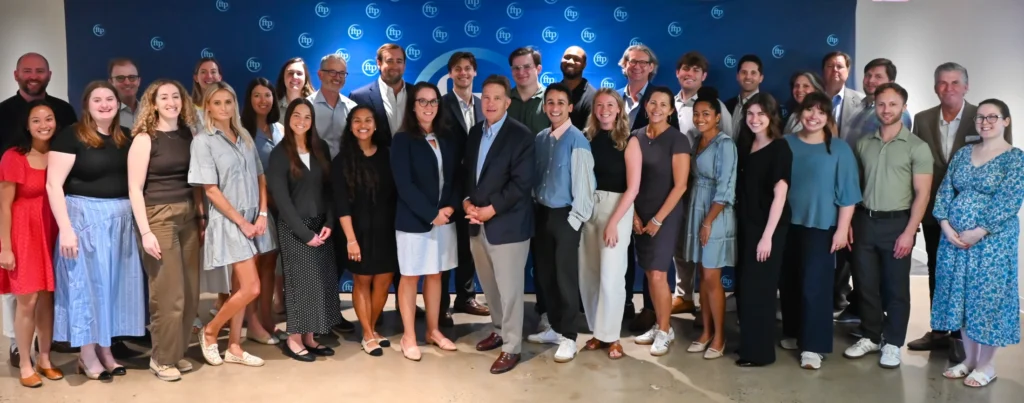
WASHINGTON – Forbes Tate Partners (FTP), a bipartisan, full-service public affairs firm, today announced that it is celebrating its 10th year in business. The past decade has seen what started as a predominately one-party government relations firm with a dozen employees grow into an integrated, multi-faceted public affairs firm with nearly 80 employees providing best-in-class service to its clients.
“The advocacy world has changed dramatically since we opened the doors a decade ago. We sought not only to respond to those challenges, but to find a way to build a competitive edge from it for our clients,” said Founding Partner Jeff Forbes.
“Our growth has been intricately tied to a changing advocacy landscape, as a fully integrated and comprehensive approach is required to change policy inside the Beltway or in any statehouse,” continued Founding Partner Dan Tate, Jr. “As we celebrate this milestone, we look forward to a future of continued evolution that will position our clients for success and sharpen our skills to embrace the next decade of change.”
Last December, FTP went public on the London Stock Exchange as part of the Public Policy Holding Company. It once again was recognized as one of Bloomberg Government’s top performing lobbying firms for 2021. Most recently, FTP was named a PRNEWS Top Elite 100 agency for 2023, a prestigious honor recognizing the firm as one of the leading public relations practices in the country.
“The firm owes its continued success to the work of our talented team, whose combined experience furnishes FTP with the expertise needed to amplify our clients’ strategic goals and achieve results,” continued Forbes.
“We are thrilled to celebrate a decade in business. Without the partnerships we have formed with our clients, some of whom I’m honored to say have been with us since we opened our doors, this growth wouldn’t have been possible,” concluded Tate. “It is an honor to represent them and advocate on their behalf, in Washington and across the country.”
###
About Forbes Tate Partners:
Forbes Tate Partners is a bipartisan, full-service public affairs consultancy specializing in government relations, grassroots advocacy, strategic communications, fundraising, and business development. The firm’s primary areas of specialty are the development and implementation of bipartisan lobbying and advocacy strategies related to tax, health care, natural resource management, trade, energy, telecommunications, outdoor recreation, appropriations, and agriculture. Jeff Forbes and Dan Tate, Jr. founded the firm in 2012.
WASHINGTON, D.C. – Forbes Tate Partners (FTP) has been named a PRNEWS Top Elite 100 agency for 2023, a prestigious honor which recognizes the firm as one of the leading public relations practices in the country. It is the first time FTP has achieved this distinction.
“As FTP celebrates a decade in business, this recognition from PRNEWS affirms that our integrated approach to public affairs has not only been effective for our clients, but has set a new standard for our industry,” said FTP Founding Partner Jeff Forbes. “With the support of our government relations and research teams, FTP’s public affairs professionals combine the best of strategic communications, policy expertise, research and insights, and advocacy experience to lead successful campaigns alongside our clients. As we mark this achievement, we are also firmly focused on the future and making the right moves to put our clients at the forefront of strategic and innovative public affairs campaigns.”
The full Agency Elite Top 100 list for 2023 is available here.
###
About Forbes Tate Partners:
Forbes Tate Partners is a bipartisan, full-service public affairs consultancy specializing in government relations, grassroots advocacy, strategic communications, fundraising, and business development. The firm’s primary areas of specialty are the development and implementation of bipartisan lobbying and advocacy strategies related to tax, health care, natural resource management, trade, energy, telecommunications, outdoor recreation, appropriations, and agriculture. Jeff Forbes and Dan Tate, Jr. founded the firm in 2012.
WASHINGTON, D.C. – Forbes Tate Partners (FTP), now in its 10th year of business, today announced it has expanded its ranks with the addition of Michael Williams as senior vice president in the firm’s government relations practice and Meg Baglien as vice president on the firm’s public affairs team.
A Capitol Hill veteran, Williams brings years of experience working for Congressional Democrats to FTP. Prior to joining FTP, Williams was legislative director for Congresswoman Lucy McBath, D-Ga., where he managed Congresswoman McBath’s legislative agenda, and was the policy lead on health, labor and employment, as well as tax and trade. Williams also worked in the office of Sen. Doug Jones, D-Ala., and is a graduate of Oglethorpe University and George Washington University.
Meg Baglien brings almost a decade of experience in both the public and private sector to FTP’s public affairs practice. Most recently, Baglien developed and led integrated marketing and communications campaigns for clients at Fortune 500 companies. A Capitol Hill veteran, Baglien previously served as Communications Director for Congressman David Young, R-Iowa and worked in in the office of Sen. Joni Ernst, R-Iowa. Baglien is a graduate of Northwestern University and is currently pursuing her Master of Business Administration at Georgetown University.
“All three of our firm’s practices – government relations, public affairs, and our research teams — continue to grow at an exceptional rate. We’re especially excited to add Michael to our incredibly strong government relations team and welcome experts like Meg to our public affairs team,” said FTP Founding Partner Jeff Forbes. “Our new colleagues offer a fresh perspective and deep experience that will further strengthen our position – regardless of the outcomes of this year’s midterms elections – and help us deliver first-class service to our clients.”
“I look forward to joining some of the best lobbyists in Washington and bringing my knowledge of Capitol Hill to the firm,” said Williams. “FTP continues to drive policy conversations across industries, and I am eager to contribute my expertise in health, labor, employment, tax, and trade to Forbes Tate Partners.”
“FTP’s public affairs team is well-known for delivering impactful and successful campaigns for clients.” said Baglien “I’m excited to bring my political and marketing campaign knowledge to the team and utilize my unique perspective to deliver winning results for our clients.”
FTP also welcomed Jack Polentes as a senior analyst on the research and policy analysis team. Prior to joining the firm, Polentes was a research assistant at the Woodrow Wilson Center’s Environmental Change & Security program, and he worked with the National Oceanic and Atmospheric Administration as a Hollings Scholar. Polentes is a graduate of Hobart College and is currently pursuing a master’s degree in Environmental Metrology and Policy.
Additionally, FTP hired Ilana Blumstein as an analyst on the research and policy analysis team. Prior to joining the firm, Blumstein interned at Brownstein Hyatt Farber Schreck in the government relations department and at the Federal Communications Commission’s Office of Legislative Affairs. Blumstein is a graduate of Marist College and George Washington University.
Lastly, FTP hired Mattie Stauss as an analyst on the public affairs team. Prior to joining FTP as an analyst, Stauss interned at FTP over the summer of 2020. Stauss also completed an internship at Seven Letter as a communications intern where she drafted digital communications, press releases, and client memos. Stauss is a graduate of Denison University.
###
About Forbes Tate Partners:
Forbes Tate Partners is a bipartisan, full-service public affairs consultancy specializing in government relations, grassroots advocacy, strategic communications, fundraising, and business development. The firm’s primary areas of specialty are the development and implementation of bipartisan lobbying and advocacy strategies related to tax, health care, natural resource management, trade, energy, telecommunications, outdoor recreation, appropriations, and agriculture. Jeff Forbes and Dan Tate, Jr. founded the firm in 2012.
WASHINGTON, D.C. – Forbes Tate Partners (FTP) today announced it has continued its expansion with the addition of Tyler Roberts as a senior vice president and Andi Zucchi and Kelsey Chan as analysts to the public affairs practice at one of Washington’s top performing firms.
A Capitol Hill veteran, Roberts brings with him nearly two decades of legislative and government relations experience. Prior to joining FTP, he was vice president of the health care and critical infrastructure practices at a leading public affairs firm, where he led coalition work for a multitude of clients ranging from pharmaceutical companies to freight rail. Roberts also served as a legislative assistant and lead staff advisor on health, tax, trade, and financial services policy for Senator Dan Sullivan (R-AK) and under Congressman Tom Cole’s (R-OK) chairmanship of the National Republican Congressional Committee. Additionally, he was a senior lobbyist for Financial Executives International, a national association of 10,000 financial professionals, where he led advocacy for the association’s private company members. Roberts is a graduate of Lake Forest College in Lake Forest, Illinois.
“As FTP enters its second decade of operations, we are focused on the future and the talented people who are already thinking about what’s around the corner to position our clients for near and long-term success. We are proud to count Tyler among that group,” said FTP Founding Partner Jeff Forbes. “I am confident he will champion our clients’ policy priorities and provide the partnership-based leadership FTP has built its reputation on.”
“This is an exciting moment for the firm, so I’m thrilled to work alongside some of the best minds in D.C. to execute innovative, forward-thinking campaigns for our wide variety of clients,” said Roberts. “As FTP continues to grow, I look forward to combining my experience and expertise with that of a top-tier team to deliver winning results and shape the policy conversation in Washington and in the states.”
FTP also welcomed Andi Zucchi as a senior analyst on the public affairs team. Prior to joining the firm, Zucchi was a fellow at Rational 360 where she developed messaging for clients across a range of industries. She also interned at Habitat for Humanity, crafting a social media strategy. Zucchi is a graduate of Denison University and earned her master’s degree from the University of Wisconsin-Madison.
Additionally, FTP hired Kelsey Chan as an analyst on the public affairs team. Chan recently completed an internship with the firm before joining full time. Prior to her time at FTP, Chan was a marketing and PR coordinator focused on building a coalition to expand food security. She also interned at a startup called BuildESG. Chan graduated from Cornell University with a B.S. in Environmental and Sustainability Sciences.
###
About Forbes Tate Partners:
Forbes Tate Partners is a bipartisan, full-service public affairs consultancy specializing in government relations, grassroots advocacy, strategic communications, fundraising, and business development. The firm’s primary areas of specialty are the development and implementation of bipartisan lobbying and advocacy strategies related to tax, health care, natural resource management, trade, energy, telecommunications, outdoor recreation, appropriations, and agriculture. Jeff Forbes and Dan Tate, Jr. founded the firm in 2012.
Dept. of Commerce and Rep. Hank Johnson Alum Joins FTP’s House Democratic Team
WASHINGTON – Forbes Tate Partners (FTP) today announced the addition of Arthur Sidney as a Senior Vice President on the government affairs team. With a deep understanding of tech, telecom, and competition policy, Sidney is well positioned to help FTP’s growing portfolio of clients across a number of industries.
“The federal policy and regulatory landscape is constantly evolving. Welcoming policy experts with a robust Capitol Hill background like Arthur’s to our already strong government affairs team ensures we will be equipped to meet today’s challenges and prepare for tomorrow’s opportunities,” said FTP Founding Partner Jeff Forbes. “His relationships on Capitol Hill – not to mention his tremendous legal and policy insights – will help us continue to deliver high-quality results for our clients.”
“Arthur Sidney served me with distinction as chief of staff for more than a decade. It’s always gratifying when I see staffers who once worked for me pursue their interests and achieve their goals. Arthur has a wealth of experience, skills, and know-how, and the right temperament to get the job done. Any organization is fortunate to have him on the team. I look forward to seeing him reaching new heights,” said Chairman Henry C. “Hank” Johnson, Jr., D-Ga.
Sidney brings more than two decades of experience in law and public policy. Prior to joining FTP, Sidney was the Computer & Communications Industry Association (CCIA)’s Vice President of Public Policy where he engaged on competition, technology, intellectual property, internet, and telecommunications issues and led CCIA’s government affairs outreach regarding “Big Tech” congressional proposals. Sidney also served as Chief of Staff and Chief Counsel and Legislative Director to two senior members of Congress for over 12 years, including Chairman Hank Johnson and Rep. Sheila Jackson Lee, D-Texas, served as an attorney for the Department of Commerce for nearly 10 years, and has served as an adjunct faculty member in law, business and public policy in nationally recognized law schools and other institutions of higher learning. Sidney is a graduate of Vassar College, Howard University School of Law, and American University’s Washington College of Law.
“I’m excited to bring my experience in technology policy, international trade, and law to FTP and expand the firm’s work in technology policy,” said Sidney. “This is an exciting time to join FTP and work with some of the best lobbyists in Washington.”
###
Forbes Tate Partners is a bipartisan, integrated full-service public affairs consultancy specializing in government relations, traditional and digital communications, grassroots advocacy and third-party coordination, insights and polling, coalition management, and business development. FTP can help you develop and deliver winning strategies to communicate and engage your key audiences.
Hire is First Addition to Firm’s Executive Leadership Team Since 2016
WASHINGTON – Forbes Tate Partners (FTP) announced today the addition of Robert Mathias as Managing Partner, the first addition to the firm’s executive leadership team since 2016. In his role, Mathias will join Founding Partners Jeff Forbes and Dan Tate in leading the firm into its second decade while driving organizational and professional development. FTP, which went public on the London Stock Exchange as part of the Public Policy Holding Company in December, continues to see tremendous growth year-over-year.
“Since our inception, FTP has been focused on hiring a great team. We are thrilled to bring Rob on board as Dan and I lead and grow our public affairs, lobbying, research, and insights practices,” said FTP Founding Partner Jeff Forbes. “Rob’s track record of positioning organizations for long-term success speaks for itself, and we look forward to the contributions he will make in shaping FTP’s future as an integrated business.”
Mathias brings extensive experience in leadership, management and strategic communications, having spent more that 20 years with marketing and communications giant Ogilvy & Mather. While at Ogilvy, Mathias led their flagship Washington, DC office and served as North American CEO for Public Relations, among other leadership roles. Most recently, Mathias was the Chief of External Affairs for the National Park Foundation, overseeing the organization’s government relations, communications, and corporate partnership functions. He has also held appointed positions in the federal government.
“In today’s advocacy environment, a successfully integrated approach to clients’ needs is essential – and FTP has proven itself to be a best-in-class operation,” said Mathias. “I am excited to join the team at this pivotal moment and contribute to the continued success of this changemaking firm.”
Robert holds a bachelor’s degree in Political Science from the University of Vermont and a Master of Business Administration from the Yale School of Management. A native-Washingtonian, Mathias has also been inducted into the Public Relations Society of America (DC Chapter) and the PRNews Halls of Fame.
###
Forbes Tate Partners is a bipartisan, integrated full-service public affairs consultancy specializing in government relations, traditional and digital communications, grassroots advocacy and third-party coordination, insights and polling, coalition management, and business development. FTP can help you develop and deliver winning strategies to communicate and engage your key audiences.
WASHINGTON, D.C. – Forbes Tate Partners (FTP) today announced the addition of Shanita Penny as Senior Vice President to its public affairs and cannabis practices. Penny brings extensive experience working as a cannabis professional, small business advocate, and an entrepreneur who has played a crucial role in helping reform cannabis laws and advance equitable policies. She will continue as a Senior Advisor to the Coalition for Cannabis Policy, Education, and Regulation (CPEAR), which represents issue experts and a vast group of stakeholders from regulated industries committed to establishing a responsible and equitable federal regulatory framework for cannabis in the United States.
“I can’t think of a better time to welcome a supply chain expert and small business advocate like Shanita Penny to the Forbes Tate team,” said Founding Partner Jeff Forbes. “Her vast knowledge on emerging markets, consumer safety, and competition policy is a boon to our clients as they navigate today’s rapidly changing economic environment. I’m also looking forward to the work she will continue to do on reforming cannabis at the federal level and advancing FTP as a thoughtful leader in this space.”
“I’m excited to be joining Forbes Tate’s accomplished team during an explosion of support for cannabis reform at both the state and federal level,” said Shanita Penny. “As conversations about federal cannabis regulation progress, I’m eager to provide our clients the counsel necessary to successfully navigate this dynamic landscape. I also look forward to broadening the firm’s reach and shaping responsible policies for businesses and consumers alike.”
“The cannabis industry is constantly evolving as more states legalize and more companies enter the space. At FTP, we have worked to help shape what a safe and equitable federal regulatory framework for cannabis will look like,” said FTP Senior Vice President and CPEAR Executive Director Andrew Freedman. “Shanita’s invaluable expertise will greatly aid our efforts in the cannabis space and will also bring unique voices from the business sector into the conversation, expanding Forbes Tate’s reach in the beltway and beyond.”
Before joining FTP, Penny served as President of the Minority Cannabis Business Association (MCBA) where she advocated for social equity policies in the industry, such as increasing diversity, expanding equal access, and promoting economic empowerment in communities most impacted by the war on drugs. She has lobbied on Capitol Hill with the National Organization for the Reform of Marijuana Laws (NORML) to help reform federal cannabis laws. She founded a boutique cannabis consultancy, Budding Solutions, to help clients establish and scale compliant, successful cannabis businesses. She also co-founded DocHouse, a craft cannabis cultivator and manufacturer acquired by Ayr Wellness. Penny currently serves on the Board of Directors for the Alliance for Sensible Markets and on the Advisory Board of Regennabis, and Shoki Beverages.
Shanita Penny is internationally recognized for her prowess in management consulting, having spent over a decade assisting Fortune 500 companies improve business performance. She holds an M.B.A. from the University of Baltimore and Towson University where she was a Wright Global Scholar. She earned her B.S. in Transportation and Logistics Management at North Carolina Agricultural & Technical State University.
###
Forbes Tate Partners is a bipartisan, integrated full-service public affairs consultancy specializing in government relations, traditional and digital communications, grassroots advocacy and third-party coordination, insights and polling, coalition management, and business development. FTP can help you develop and deliver winning strategies to communicate and engage your key audiences.
WASHINGTON – Forbes Tate Partners (FTP) announced today the addition of Dr. Christy Gamble as Senior Vice President to lead the firm’s Research and Policy Analysis department. Dr. Gamble brings tremendous experience in strategic policy research to Forbes Tate and has done extensive work on Capitol Hill and across the country to reduce health and economic disparities for marginalized communities.
“We are thrilled to have Dr. Gamble’s insights and expertise, and we welcome her to the team,” said FTP Founding Partner Jeff Forbes. “Our research department is an integral part of our team, providing the latest information we and our clients need to successfully advance important policy objectives. She is a strong leader who brings with her the tools needed to provide our clients every advantage possible in a very complicated legislative landscape.”
“I’m looking forward to joining the talented team at Forbes Tate Partners in their Government Relations practice and leading the firm’s Research and Policy Analysis division,” said Dr. Gamble. “Advancing our client’s policy priorities requires creative solutions and an exceptional understanding of the political and policy dynamics impacting not just Capitol Hill and the administration, but also statehouses across the country. That’s why I’m excited to contribute my unique background and experiences to support and amplify the strategic goals of our clients in today’s political environment.”
Prior to joining Forbes Tate Partners, Dr. Gamble served as the Director of Research, Policy, and Practice at HUED, a startup focused on connecting marginalized patients of color to culturally competent medical providers in their communities. Dr. Gamble also worked as the Head of Policy and Strategy for two non-profits aimed at advancing health equity for marginalized communities. She has served as the Democratic Health Counsel for the then Oversight and Government Reform Committee.
She was also selected as a National Minority Quality Forum’s 40 Under 40 Leader in Health, deemed an expert with the Allies for Reaching Community Health Equity Expert Network, and named the Duquesne University School of Law 2016 Recent Graduate of the year. Additionally, Dr. Gamble has written several op-eds that were featured in U.S. News and World Report, ABC News, The Hill, Rewire, and TruthOut.
Dr. Gamble earned her JD from Duquesne University School of Law; she also holds a DrPH in epidemiology from the University of Pittsburgh Graduate School of Public Health and an MPH in epidemiology and biostatistics from Eastern Virginia Medical School. She received a BS in microbiology from North Carolina State University.
###
Forbes Tate Partners is a bipartisan, integrated full-service public affairs consultancy specializing in government relations, traditional and digital communications, grassroots advocacy and third-party coordination, insights and polling, coalition management, and business development. FTP can help you develop and deliver winning strategies to communicate and engage your key audiences.
WASHINGTON – Forbes Tate Partners (FTP) today announced the additions of Michael Pepe as a grassroots advocacy Senior Vice President and Taylor Mason as a state government relations Vice President. As FTP expands its federal and state advocacy programs, Pepe will focus on leading the firm’s grassroots practice, while Mason will join the firm’s growing state government affairs team.
Pepe brings more than two decades of experience in strategic communications, grassroots, and grasstops campaigns. Prior to joining Forbes Tate Partners, Pepe served as a Senior Director of Communications at the U.S. Chamber of Commerce, where he led strategic communications efforts for the financial services policy division. Pepe is a graduate of American University and Suffolk University Law School. Mason, a University of South Carolina graduate, has spent the past decade working closely with state and federal government agencies across the country and as a Communications Director for Rep. David Young, R-Iowa. Most recently, he helped launch The Rare Disease Company Coalition and served as the coalition’s Executive Director, guiding government and public affairs strategy, advising on policy positions, coordinating policymaker and third-party group outreach and advocacy, and driving membership development.
“Effective advocacy campaigns require a deep understanding of the legislative landscape and the key players involved in making policy decisions, which is why we are especially excited to bring Mike and Taylor on board,” said FTP Founding Partner Jeff Forbes. “Their years of expertise in grassroots, communications, field campaigns, and federal and state public policy will help us continue to execute winning campaigns for our clients across the board – from statehouses to Capitol Hill. We’re pleased to welcome them both to the team.”
“I look forward to bringing my grassroots advocacy experience to FTP and leading the firm’s growing field services team,” said Pepe. “I’m looking forward to leading the firm’s multi-talented teams and delivering impactful and successful campaigns for our clients.
“This is an exciting time to join Forbes Tate as the firm grows its state government advocacy practice,” said Mason. “I’m thrilled to bring my strategic communications, policy, and advocacy experience to the team and working with some of the best state-level government relations experts in the business.”
FTP also welcomed Eliza Green as an analyst on the Public Affairs team. Prior to joining the firm, Green completed two internships at the Department of State — one at the U.S. Embassy in Beijing and the other at the Office of Policy, Planning, and Resources. Green is a graduate from The Ohio State University.
###
Forbes Tate Partners is a bipartisan, integrated full-service public affairs consultancy specializing in government relations, traditional and digital communications, grassroots advocacy and third-party coordination, insights and polling, coalition management, and business development. FTP can help you develop and deliver winning strategies to communicate and engage your key audiences.
This article was originally published in POLITICO.
As he waited inside Room 2358c of the Rayburn House Office Building, the realization set in for Brian Wallach that he had five minutes to shape the rest of his life.
Not save it. He had been given his death sentencenearly two years ago when, at the age of 37, on the day his newborn daughter came home from the hospital, his doctor told him he had the progressive neurodegenerative disease Amyotrophic Lateral Sclerosis, or ALS.
No, this was a chance to accomplish what he’d set out to do after that diagnosis, to make something of this final chapter, something that would materially impact others with this horrible, fatal illness and just maybe — after all, one must hope — allow him a chance to survive it too.
He was dressed in a sharp blue suit and a striped blue tie, the type of outfit he had confidently worn when he worked at the Obama White House or, after that, the U.S. Attorney’s Office in Chicago, the arc of his professional achievements facing nary a disruption.
But that was then. Now, life was defined by disruptions — visible in subtle ways that day. He had always been thin but was thinner now. There was a hitch to his gait, a scratch in his voice and his fingers pinched as a result of his muscles slowly failing him. It was early April 2019. And, in classic D.C. fashion, it was unseasonably muggy. The room, packed with other patients and advocates, family members and supporters, made it all the worse.
As Brian waited, those patients and advocates took their turns sitting at a massive oval table placed in front of a dais, each getting five minutes to make the case that their disease deserved funding and attention from the members of the House Appropriations Subcommittee on Labor, Health and Human Services, and Education.
Five minutes. A clock was there to remind them that was all they got. And if that wasn’t enough of an indignity, there was the site at the dais: About a dozen chairs — plush and leather and arranged in a neat arc — sat empty. Only one member had come to listen: Rep. Rosa DeLauro (D-Conn.), the subcommittee’s chair.
At 3:14 p.m., it was Brian’s turn. The timer started.
“I will not see my daughters grow up,” he said. His pace was methodical, owed to the practice sessions he’d done. There was only a slight strain in his voice. “There is no cure. Not because ALS can’t be cured but because we have underfunded the fight against ALS year after year after year. I know this committee doesn’t often hear from people with ALS. You don’t because ALS is a relentless churn. We diagnose. We die, quickly. We don’t have time to advocate.”
He implored the committee to take action, explaining that it had the power to save his and other patients’ lives. And then, it was over.
DeLauro, having sat there with her hands clasped in front of her mouth, thanked him for his testimony. Brian thanked her in return and stood up and left, fearful he’d burst into tears after she offered her hope that he’d see his daughters’ kindergarten graduations.
Off to the side, Brian’s wife Sandra was sobbing. Later, she would tell me how vulnerable she felt watching her husband speak, how “emotionally protective” she was seeing him sitting there at that table, weakened and alone.
“The intensity of being given five minutes to make the case for your life and the life of so many people. The intensity of that, the stakes of that, how dire it all is,” she recalled. “I fell apart.”
Brian eventually fell apart too. In the hall outside, he and Sandra embraced and cried together as Hill aides and others who had been in the room mingled around them. The next day, we texted.
“Wish my voice was stronger but other than that good,” he said of the testimony. “It is a start. We have a lot of work left.”
Over time, Brian would explain to me just what that work entailed. He didn’t just want to stand up an entirely new ALS advocacy group, or secure more funding for ALS research, or expand access to treatments for the roughly 15,000 Americans with ALS, or provide inspiration to others, or demonstrate to his children that their father, even in his abbreviated time, did something meaningful. He wanted to fundamentally alter the way patient advocacy works and how investments in medical research for fatal diseases were conceived.
“I like to dream small,” he would tell me in one of our many conversations.
Within two-and-a-half years, he had done it.
If Brian’s testimony before DeLauro’s committee was a starting gun for his legislative efforts, the finish line came in a little-noticed ceremony on Dec. 23, 2021. As much of political Washington D.C. was leaving town for the holidays, President Joe Biden signed into law the Accelerating Access to Critical Therapies for ALS Act, or ACT for ALS.
The bill, which Brian helped write, authorized $100 million a year over a five-year period for ALS research and to help individuals with ALS who had been unable to participate in clinical trials to get expanded access to the new medications being studied. It established FDA guidelines around those studies along with grant programs to fund them. And it called for greater coordination, both between private and public researchers and between federal agencies with respect to their work on neurological diseases.
Congress has yet to decide exactly how to allocate that money and where the money will come from, but the authorization was historic. The Ice Bucket Challenge in 2014 had raised $115 million total for ALS research. This did nearly the same every year over half a decade.
“It is not a stretch to say it could very well be life saving for many individuals with ALS,” said Paul Melmeyer, the vice president for public policy and advocacy at the Muscular Dystrophy Association, which worked alongside Brian in pushing for the bill. “Individuals who otherwise would have not obtained any investigational therapy or promising therapy … have a much greater opportunity to access these therapies. … This has never been done before.”
At the signing ceremony, Biden was flanked by screens showing ALS patients and advocates who had beamed in virtually for the occasion. He thanked them and members of Congress who had pushed for the legislation. But he singled out Brian and Sandra specifically.
“They turned their pain into purpose,” Biden said of the two.
Pain hadn’t always been a defining feature of Brian’s life.
In our talks over the past three years, he described an idyllic childhood in the D.C. area where it was almost preordained that he’d find success in a field of law, politics or somewhere in between. His grandfather had been the last U.S. ambassador to Iran. His mother practiced at the Securities and Exchange Commission. His father was a partner at the firm Hale & Dorr, currently known as WilmerHale.
Brian went to all the top institutions — St. Albans, Yale, Georgetown Law — excelled at sports and did the things a political striver would do. In college, he wrote his senior thesis on how presidents selected their cabinets.
Pain was introduced into the equation during his junior year at Yale when, unexpectedly, the dean of his residential college called him to say there was “some bad news” and that he needed to call his mother. His father had died of a heart attack. He was 54.
Brian often sidestepped my attempts to get him to reflect on how much this shaped his life, save to say that “it created in me this pursuit of the epic.” At one point, he told me that he believed if he lived longer than his dad, he “would be lucky” — not to make the point that ALS had been doubly cruel, depriving him of even his abridged version of what a full life would be, but to emphasize that his mindset was already on an accelerated path.
His younger brother, Peter, suggested that their dad’s death made Brian more risk tolerant and, in a way, ambitious; that suddenly it crystalized for him that time is finite and shouldn’t be wasted on side pursuits.
And it wasn’t. After Georgetown Law, Brian joined the Obama presidential campaign as its deputy political director for the New Hampshire primary. From there came a stint at the powerhouse firm Skadden, Arps before he went to work at the White House counsel’s office in 2011. His defining professional characteristic became his rather insane work ethic. I know because my wife was in the counsel’s office with him, and on the occasions when she’d work until 2 a.m., it would be Brian with whom she’d invariably share a cab ride home.
Years later, Brian was enduring long work hours once more, this time in Chicago as a federal criminal prosecutor in the U.S attorney’s office — the “dream job” that seemed to everyone around him like the logical launching pad for some future run for elected office. It was April 2017, and he was handling a case involving gun smugglers who had brought weapons from Indiana into Illinois.
His left hand cramped up and he dropped his pen. Minutes later, it happened again.
Brian was diagnosed with ALS a few months after the pen incident. He had been coughing throughout his time at the hospital where he and Sandra were waiting to bring their second daughter home. The neurologist that examined him said he likely had six months to live. A battery of tests and consultations followed, all bringing the same conclusion: It may not be six months, but he had a disease that meant the progressive degeneration of his brain’s motor nerve cells. It would kill him.
About a month after the diagnosis, Brian said, he first started thinking about what to do with the time left. In November, he met with a neurologist in Boston who planted an idea in his head. What if he and Sandra, who had been Sen. Dick Durbin’s press secretary before going to work on the Obama campaign and then becoming press secretary to Education Secretary Arne Duncan, applied their political backgrounds to ALS advocacy?
“I can’t tell you that you don’t have ALS,” the doctor told him. “But I can ask you this question. If you do have ALS, what do you want to do? You’re 37. You know lots of people. You can make a difference.”
He and Sandra started discussing whether they could start a new venture while juggling the demands of being parents and Brian’s deteriorating health. They did their research too. “We flew around the country and met with different groups to figure out if there was a single group doing this thing right,” Brian told me. “It’s like a presidential campaign, you want to figure out if this is the right thing for you.”
What they discovered was that, for all its lofty purposes, ALS advocacy lacked something fundamental: a basic understanding of how modern D.C. works. Pulling heart strings can get you a press release, but legislative outcomes require sustained engagement, robust fundraising and personal connections.
Sandra, for one, recalled her time on the Hill when advocates would have “fly-in” days to meet staff and push causes. “They’re emotional but that one moment in time doesn’t move the needle,” she told me. Activists were “building the wheel every time.”
The two decided to build something new. On Jan. 22, 2019, they launched I AM ALS. Unlike establishment groups that focused largely on policy, it would be unapologetic in tackling the politics of ALS. And, contrary to what Brian would tell DeLauro, it would place a big bet that victims of ALS could indeed be committed activists, even as they prepared for death.
The group would provide support and resources for those newly diagnosed. It would fund existing research and demand lawmakers spend more too. But the holy grail would be to convince the government to allow ALS patients greater access to clinical trials and to help pick up the tab, which lawmakers and federal agencies had been reluctant to do out of concern that it would be too expensive, that the payoff would be too uncertain, and that they would lure patients away from existing studies if new and potentially ground-breaking ones became available.
“If you testified in Congress and the question was, ‘Give us a complete rundown of all the progress we’ve made on ALS and other neurodegenerative diseases since Lou Gehrig’s [1939 “luckiest man”] speech,’ the testimony would not take long,” said Rep. Mike Quigley (D-Ill.), one of the members with whom Brian worked most closely on the legislative push. “The fact is, we needed to pivot and take a different direction.”
To start the pivot, Brian turned to a kitchen cabinet of unpaid advisers who helped him stand up I AM ALS and connect him with key players across D.C. One of the first was Michael Slaby, who had been chief technology officer for Obama’s 2008 campaign, and currently serves as the group’s interim CEO. He enlisted Ben LaBolt, Obama’s press secretary for the 2012 campaign, to help with comms work, held semi-regular calls with other Obama alums, and utilized his connections to the Obama Foundation to get the former president to put out a video touting I AM ALS as a philosophical extension of the Obama campaign itself.
For the group’s board, he got, among others, Dan Tate, an ALS patient himself and a founding partner of the lobby shop Forbes Tate Partners, which on a pro bono basis helped coordinate I AM ALS’ grassroots and Hill strategy. And he hired a range of officials who worked at the intersection of biomedical research and politics for the day when he himself would be gone.
“One of the biggest difficulties for ALS groups is that when the person who founded the group gets sick, the group falls apart,” Brian told me.
He hired several lobbying shops, including Winning Strategies Washington. At the firm’s office in downtown D.C., Brian would occasionally work. In one session — which he let me sit in on before the firm’s staff kindly asked me to leave — the granularity of his involvement was on full display. He didn’t just want medical experts to accompany advocates to the Hill, he wanted them to have ready data for the question he and Sandra knew they’d get by some time-strapped legislative assistant: “Your story is moving. But how is it different from story 1, 2, 3, and 4?” He wanted to target lawmakers who worked on defense budgets by enlisting veterans who were suffering from ALS. (According to several studies, veterans are 1.5 to 2 times more likely to get ALS than those in the general population.) He wanted to underscore, ad nauseam, that ALS research could unlock cures for other neurodegenerative diseases, like Parkinson’s and muscular dystrophy. Don’t ask for a moonshot, he stressed, ask for scientific discovery.
The group helped score some early victories, including getting the Pentagon to double its investments in ALS research from $10 million to $20 million, and then to double it again to $40 million. They created an ALS Caucus on the Hill. Brian personally delivered a letter and accompanying stack of paper signed by 10,089 ALS activists to the FDA demanding it publish long-promised, revised guidance on how ALS clinical trials could be designed. The agency subsequently did it.
Through it all, Brian seemed to be everywhere. Over coffee one day he casually dropped that he was in a rush to talk with David Bradley, the D.C. media mogul and founder of two of Washington’s top consultancies. At other times he was off to chat with top officials at the National Institutes of Health, or with Priscilla Chan, Mark Zuckerberg’s wife and head of the Chan Zuckerberg Initiative, at the Aspen Ideas Festival, or with Donald Trump’s FDA commissioners: first Scott Gottlieb and then Stephen Hahn.
“A human rolodex,” is how Eric Schultz, another Obama vet who has worked informally with Brian put it. “But it didn’t go to waste. A lot of people want that at their disposal for prestige purposes. But that wasn’t Brian and Sandra.”
The breakneck speed seemed unsustainable. But Brian found it calming to be working, especially around other patients, where conversations didn’t necessitate explaining what ALS was and how it affected people. He felt, in a way, responsibility toward them — not just because he had a skill set and connections that could be used to improve their lives but because, for the time being, he was able to stand and talk and do things that allowed him to fit in more easily among the rest of society.
But he also knew his clock was ticking. As we sat at a coffee shop in D.C. during one of those early Hill blitzes, he mentioned the awe he felt watching other prominent ALS activists who were more stricken by the disease than he was.
“You know you will be there,” Brian said. “But you don’t think about how you will be when you’re there.”
In June 2020, ACT for ALS was formally introduced.
Not surprisingly, Brian had done his homework. He scheduled a meeting with Sen. James Inhofe (R-Okla.) because a legendary high school football coach in his state, Allan Trimble, had recently announced that he too had ALS. He worked with Sen. Lisa Murkowski (R-Alaska) because her cousin’s husband had died of the disease. He collaborated on the idea of the ALS Caucus with Rep. Jason Crow (D-Colo.), who lost a cousin to ALS. He co-wrote a Fox News op-ed with Rep. Jeff Fortenberry (R-Neb.), whose wife’s brother had the disease and who would be, along with Quigley, the main driver of the bill.
When Brian wasn’t meeting with lawmakers personally, his group and the activist community was pushing them, oftentimes aggressively. One Republican Hill aide described it as “a blowtorch of advocacy.”
“You have to understand,” Fortenberry told me, “When it comes to the small disease category, for an office to dedicate itself to it is a huge ask. We don’t have unlimited resources. Other offices might be sympathetic. But they don’t have the capacity to deal with this either. All of these things create hurdles and roadblocks. You have to have this almost unimaginable alignment for this to happen. And ultimately it takes perseverance from people like Brian.”
With Sandra as a media sherpa, Brian turned himself into an avatar for the cause. He did national TV, used Twitter vociferously and, after sitting for another magazine profile while he and I were talking for this piece, suggested as a fall back that we simply write a book. When he told me, more recently, that he had sat down for yet another magazine profile, his consolation prize was only slightly different. “If we don’t do the piece,” he wrote, “I got 2 book offers today.” In December 2019 he showed up in Times Square, as I AM ALS took over two massive billboards there that flashed signs like “ALS IS OVER If you want it” and “F*CK YOU ALS.” The billboard takeoverwas accompanied by an over-the-top Jerry Bruckheimer-like video promoting their promotion. In May 2020, Brian texted me that his organization had also gotten $350,000 to make a documentary, which is now 90 percent done.
It wasn’t just press for the sake of it. Sandra wanted to change the very perception of a classic ALS story from tragic into hopeful. “No one is going to engage and help us if you shut them down with a depressing story line,” she explained.
As his public persona grew, so too did the expectations and demands around him. At one meeting, Rep. Eric Swalwell (D-Calif.) — whom Brian had gotten to know through mutual friends — called him the “face of ALS.” Brian reacted nonchalantly to the compliment. But after Swalwell left the room, he showed some discomfort. The campaign wasn’t his alone. And while he desperately wanted to change how the government fought diseases like the one had, it was coming at a personal cost.
“You know you’ve been given this honor to be in this room but then you have a moment that I would rather be anywhere but here,” he told me.
Brian’s body was deteriorating. He was using a cane and would soon switch to a wheelchair. As the legislative process kept moving — with more co-sponsors signing on to the bill and negotiations over the contours of the expanded access program progressing — he began losing his ability to speak. Sandra stepped into the breach. On July 29, 2021, she delivered his testimony for him at a hearing before the House Energy and Commerce Health Subcommittee. She called it, “our closing argument for our lives.”
Anxiety was growing. Fortenberry said he feared Brian would die before the bill passed. Quigley, according to a person familiar with the internal talks, warned colleagues that if that were to happen, he would be livid. By the end of the year, the legislation had made it through the committee, with lawmakers having worked through sticking points over the expanded access funding guidelines. It had far more co-sponsors than votes needed. The question was when it would get a full vote.
The bill came to the House floor on Dec. 8 and passed 423-3. Eight days later, it unanimously passed the Senate. Within a week, Biden had signed it into law. Decades of relative inertia had been reversed in a month, all with Brian still alive.
“In an era of complete polarization, I AM ALS managed a minor miracle: winning overwhelming congressional support for a substantial, perhaps even transformational piece of legislation,” Ady Barkan, perhaps the most well-known ALS patient-advocate, said in an email. “Act For ALS was conceived of, written by, and passed because of people living with the disease and our loved ones. Brian and Sandra built a powerful organization, and mobilized the ALS community to accomplish something wonderful. I am grateful and in awe.”
A few weeks after Biden signed ACT for ALS into law, Brian announced that a person in his household had contracted Covid. For the mass of people dealing with the Omicron outbreak, this would have been an inconvenience. For Brian, it meant facing the possibility of death.
He and his family had taken extreme precautions to avoid getting the disease. Still, it had found him. His wife and daughters left for his in-laws, leaving Brian isolated at home with a caregiver.
When we texted, his answers were shorter than usual. He was not yet infected. They had caught it early. There was hope.
He had had scares before. One time he fell on a curb, busted his head open and ended up in the ER with 11 staples in his head. Two months ago, he rolled out of bed and gashed his head in two places. It was 2 a.m. Sandra couldn’t reach anyone on the phone to come help and was too scared to risk a Covid infection by bringing him to the ER. So they sat there for two hours as she used towels to staunch the bleeding until finally she felt comfortable walking over to a neighbor’s house to ask for help lifting Brian back into bed.
As he was surviving these brushes with death, those he had grown to find community with and solace from were not. When Pat Quinn, one of the Ice Bucket challenge organizers died, Brian told me it hit him hard, more so because he’d also lost four other friends that same month. A year earlier, when Pete Frates, the other Ice Bucket challenge organizer died, Brian shared an email he had received from Ady.
“Ady just emailed with an apt summary: ‘No one fucking survives this thing,’” Brian wrote. “For 150 years it has been true. Do I think we will succeed where others have not? Yes. It may sound insane but what I see every day in terms of progress is simply astounding.”
As we talked over the years, it became harder to see how Brian maintained this commitment. After all, he had the luxury of knowing what his father didn’t: that his time was finite.
He’d made adjustments. His phone was put in a drawer when he was with the kids. He planned trips to bucket list places. He no longer got frustrated by the annoying routines that accompany parenthood. He and Sandra talked about the end of life, what kind of care he would want and the logistics of dying. I asked him once if he believed the disease had made him a better person.
“It’s a difficult question to answer because,” he responded. “On the one hand, ALS leaves you with emotional and mental clarity vis-a-vis what matters in the world. It enables you to be more empathetic and in tune with people around you because you know even if they have a plan they may be struggling as much as you are.”
He and I were sitting in the Capitol that day, after yet another meeting with members and in preparation for a ceremony honoring Steve Gleason, the former NFL player stricken by ALS.
“But the reason why it’s hard to answer,” he went on, “is that, at the same time, I feel like I’m a worse father. I feel like I’m a worse husband. Not because I don’t want to be there but because I can’t physically be there and that, at times, causes me to withdraw. I see them playing and I want to go to them. But I know that if I do, there is a chance I can fall and that will be a disaster for everyone.”
With ALS, life changes don’t just happen to the patient but to those around him and her. Peter, for one, described the mental anguish of feeling an arm twitch and wondering if he would soon suffer his brother’s fate. The two talk almost every day as he tries to savor the time when he can still make out the words in Brian’s speech. He said he found himself, at times, wondering what he would say at his funeral.
Sandra, meanwhile, had to become a full-time caregiver while raising two young girls, all in the midst of a pandemic. The public face of determination she wore often hid the incredible toll the disease had taken.
“It is true that when something like this happens to you, you understand the beauty of the present moment,” she told me. “But the caveat for me is it is underpinned with grief.”
Brian’s response to all this — to the worrying, and the grief, and the literal and figurative ticking clocks — is to find some purpose in the moment and to take stock of what is good. To text with joy that, upon turning 41, he can still hold a beer with one hand. To post about the serenity of looking out over the waters of Lake Michigan, or the thrill of still being able to pick up his daughter from school.
“Every day in life is a sprint,” he once told me. “But I know that barring some terrible catastrophe, the end will not be tomorrow. Two-to-five years in the scheme of things is short. But I have this new temporal horizon where it feels remarkably long to me.”
At night, he signs off his last tweet with the phrase “Good Night Moon,” an homage to the famous children’s book in which a little bunny, heading off to sleep, looks around the room and says goodbye to all that’s in it and the stars, air and moon as well. He is grateful for what is there, both near and far, as he drifts off alone to a different place where that world won’t be.
###
Forbes Tate Partners is a bipartisan, integrated full-service public affairs consultancy specializing in government relations, traditional and digital communications, grassroots advocacy and third-party coordination, insights and polling, coalition management, and business development. FTP can help you develop and deliver winning strategies to communicate and engage your key audiences.